
Some stories are hiding under the floor. At Stokesay Castle in Shropshire, a 2023 excavation beneath the Great Hall turned up the remains of medieval feasting: animal bones, fragments of glass, the leftovers of a household that ate and entertained on a grand scale more than 700 years ago.
Historic England asked Candle & Bell to tell that story on film. The result is Archaeology Found Under England's Finest Fortified Manor House, a heritage documentary that has now reached over a million people, and one of the best-performing videos in Historic England's catalogue.
The brief: archaeology that feels alive
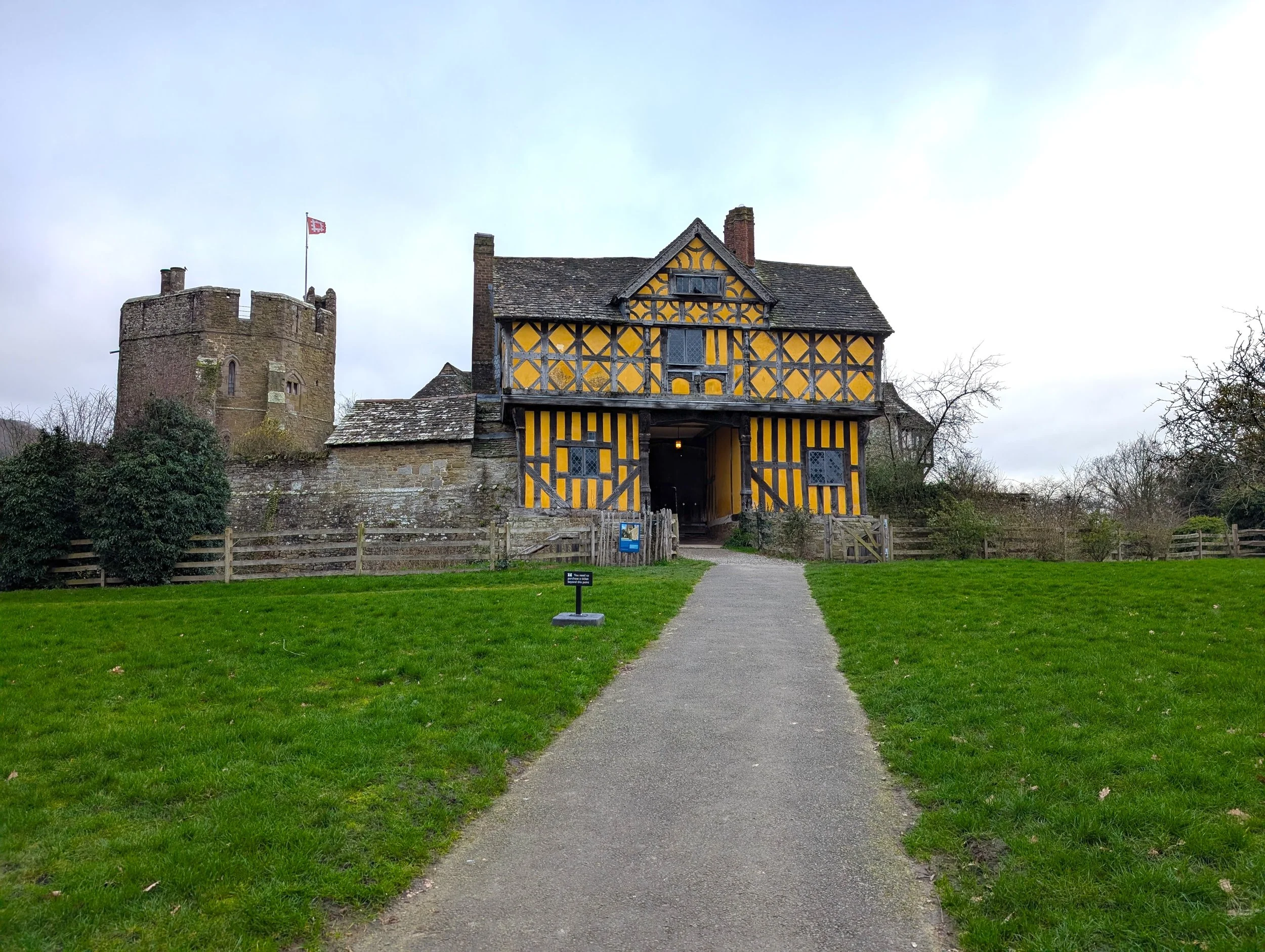
Stokesay Castle is one of the finest and best-preserved fortified manor houses in England. It was built in the 1280s by Laurence of Ludlow, one of the richest wool merchants in the country, and has barely changed since. It is cared for by English Heritage.
Historic England, commissioning through its video framework, wanted a film that did two things at once. It had to explain real science — what the finds are and how researchers analyse them — and it had to make a general audience care about the people who lived, worked and feasted there.
That is exactly the kind of brief we love. As a heritage video production company, we don't treat historic sites as backdrops. We look for the human story in the stone.
Two locations, one story
The film moves between two very different worlds.
On location at Stokesay Castle, presenter Jay Jackson explored the Great Hall with Louise Bartlett, Senior Properties Curator at English Heritage.
Jay had experience talking to camera, but wasn't a professional presenter. From our first meeting, we felt their enthusiasm for the subject, and the warmth and charisma that came with it. Casting matters, whether it's a TV show or a YouTube video, because the presenter is who your audience connects with. We gave Jay a script and they made it their own. We loved working with them, and they bring the film to life.
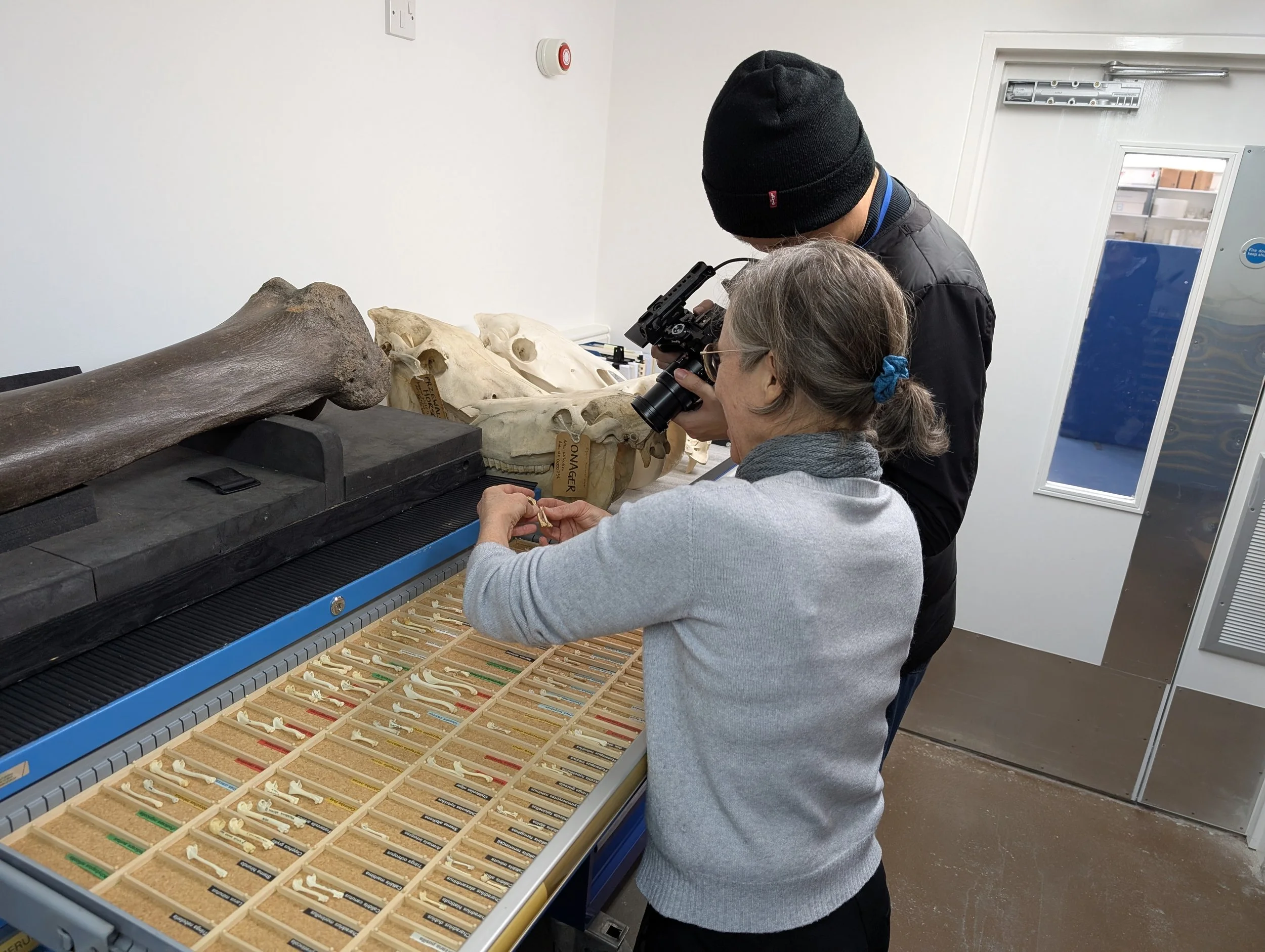
At Fort Cumberland Laboratories in Portsmouth, Historic England's national centre for archaeological science, we filmed the researchers analysing the finds:
Dr Irene Bargagli on the medieval glass and how X-ray fluorescence reveals what it's made of
Polydora Baker on the animal bones — which species were eaten, and the butchery cut marks and dog gnaw marks that bring a feast back to life
Dr Emma Brownlee on radiocarbon dating, and how science pins the finds to a moment in time
Researchers and academics aren't used to being in front of a camera, and that's OK. We don't expect them to be. We've worked with many people in the heritage and culture sectors who are experts in their field but find talking on camera hard. Our job was to keep the day relaxed, fluid and conversational, so the team at Fort Cumberland could do what they do best: share their research and bring the story of Stokesay Castle to life.
How we made it cinematic, on sites with restrictions
Archaeology films can easily become a series of talking heads in white rooms. Heritage sites and working laboratories also come with limits on where you can go, what you can bring and what you can film. Here's how we worked with both.
Portable kit, without compromise. We kept our kit light so we could move quickly and work in tight, sensitive spaces, while still shooting in 10-bit 4K. That gives the grade real depth, and gives Historic England footage that will hold up for years.
Macro lenses for the finds. Fragments of glass and bone are small, and their stories are in the detail: the colour of a medieval glass shard, a butcher's cut mark, the gnaw marks of a dog. Macro lenses let the audience see exactly what the researchers are looking at.
Drone shots with a job to do. We planned every drone shot around what the film would need to explain. Knowing the story would turn to trade, we made sure the aerial of Stokesay shows the geography of the place: the road that was vital to early trade, and the reason this spot in particular was chosen for the hall.
Picture on words. Every scientific explanation is paired with an image that shows it. When the glass is discussed, our drone footage drifts past Stokesay's medieval windows. When the bones are discussed, we're in close on the specimens themselves.
Building around restrictions. Heritage and laboratory filming always comes with limits. Radiocarbon sampling couldn't be filmed, so we covered that section with conversation between the researchers, close-ups of the bone assemblage and wide shots of the lab. Planning for those constraints in pre-production meant the edit never felt like it was missing something.
A story with a heart. The film closes not on the wealthy merchant, but on the unnamed people — cooks, servants, builders — whose work is written into the finds. That shift from objects to people is what makes a heritage film stay with an audience.
We also took care of the practical side that heritage clients need: full risk assessments for filming inside a Scheduled Monument and a working laboratory, protecting nationally important collections, sensitive scientific equipment and listed building fabric.
The results: over a million impressions
The Stokesay Castle film has achieved:
Over 1,000,000 impressions
Over 130,000 YouTube views
A click-through rate of roughly 7.5% — well above typical YouTube averages
Historic England's project lead told us it outperforms the rest of their catalogue. For a documentary about the leftovers of a 13th-century dinner, that's a remarkable audience — and proof that heritage stories, told well, travel.
Why it worked
The heart of the film was shot by our team, on location, for this story. Where stock imagery could add something we couldn't capture ourselves, we chose it carefully, so it sits naturally alongside our own footage rather than filling gaps. That is how we approach every project: cinematic, emotive filmmaking built on real people and real places.
Planning a heritage film?
Whether you're a heritage organisation, museum, archaeology unit or historic property, we can help you turn your research and your places into films people actually watch.
We're based in Gateshead and work across the North East, Cumbria, Yorkshire, the Scottish Borders and the whole of the UK.
Get in touch: hello@candleandbell.com · 0191 303 7734